The short answer
A small ranch or condo may take one to two days. A typical two-story home can take two to four days. A large house with several bathrooms, finished basement walls and plaster can take a week or more. Those are working ranges, not promises, and a site visit gives the real number.
Water is off for part of each day, but a good crew works to restore it by evening.
What stretches or shortens the job
| Factor | Effect on time |
|---|---|
| House size and bathrooms | More fixtures, more runs |
| Open basement or crawlspace | Faster access |
| Plaster or tile walls | More careful opening and patching |
| Pipe material chosen | PEX goes faster than copper |
| Permit and inspection timing | Can add a day or more of waiting |
Copper or PEX
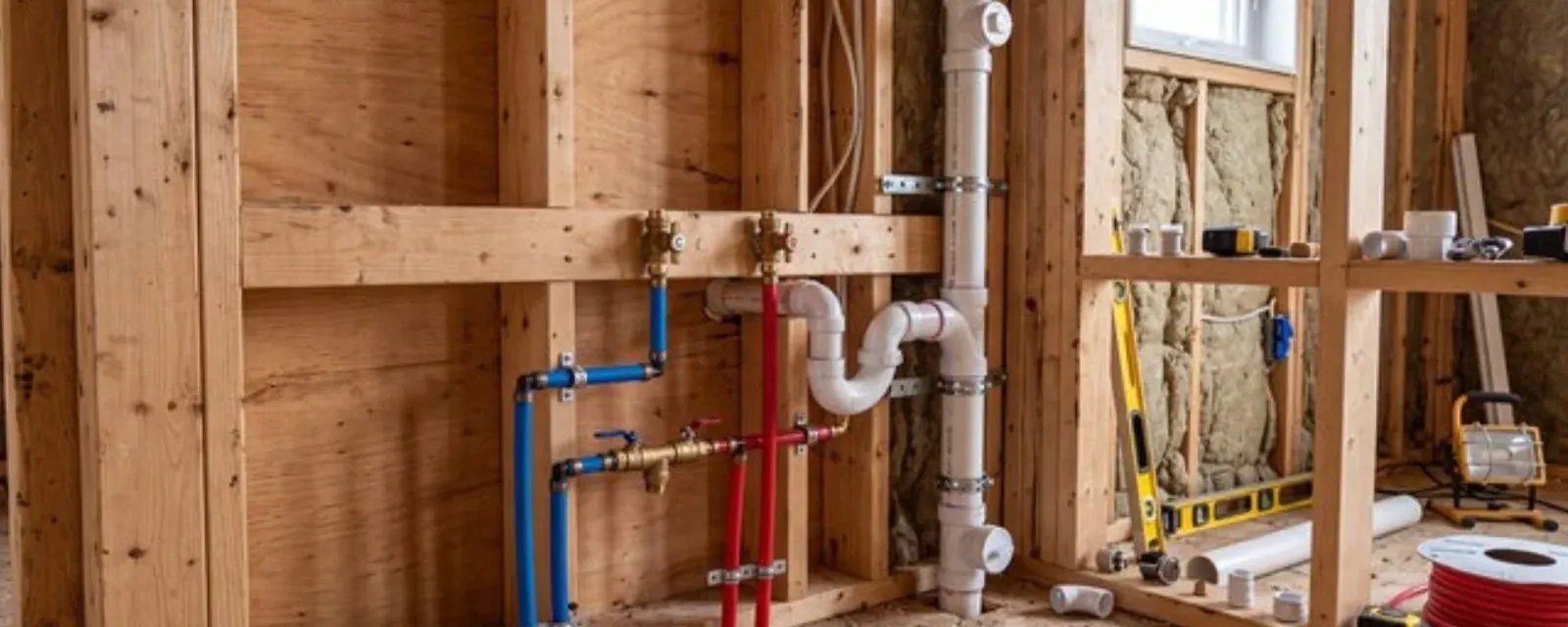
PEX is flexible and can be fished through walls with fewer cuts. Copper is rigid, has a long track record and requires more joints. Both can be done well. The right pick depends on budget, house layout and preference.
In a repipe, the plumber will often choose a manifold layout with PEX, which reduces joints inside walls. Ask about materials and why.
How the days go
Day one usually covers the survey, shutoffs, protection of floors and the start of new runs. Middle days finish the runs, connect fixtures and pressure test. The last day covers inspection, restoring service and cleanup.
Drywall patching is separate. We cut small access holes and leave them ready for a drywaller or painter you choose. Some houses prefer to schedule that finish after the water is back.
Living in the house during the work
You will lose water for several hours each day. Plan showers, laundry and cooking around it. Keep pets and children away from the work zone, and move valuables out of work areas.
If you cannot stay in the house, ask about a staged approach that restores water at night and keeps one bathroom working.
Costs of a longer schedule
A job that stretches past a few days costs more because the crew spends more time on site and the house is disrupted longer. Planning the scope, ordering materials early and clearing access shorten it. Ask for a schedule with milestones and a rain or delay plan.
It is reasonable to ask which days water will be off and for how long.
Insurance and the leak history
If repiping follows a leak or a burst, take photos of the damage and keep receipts. Insurance sometimes covers resulting damage even if it does not cover the pipe itself. Ask your agent before work starts.
A written report from the plumber that names the failure helps your claim.
What slows a repipe down
Surprises add time. Hidden asbestos tape on old pipe, a cut joist or a wall full of wiring can stop a crew until the issue is handled. A pre-job survey, including a look in the attic and the crawl space, reduces the chance of delay.
Weather matters less indoors, but delivery of materials and inspector availability can shift the schedule by a day. Ask for a plan B date up front.
After the pipes are in
The final steps are pressure testing, flushing, inspection and cleanup. You will see small access holes in walls or ceilings. Plan for patching and painting, and keep a record of where the new lines run for future projects.
A simple sketch or phone photos before closing walls helps everyone down the road.
A sample schedule for a two-story home
Day one covers protection of floors, shutoffs and new runs in the basement. Day two runs the upstairs lines and connects fixtures. Day three pressure tests, flushes and prepares for inspection. Day four, if needed, handles the inspection, final connections and cleanup.
Your own schedule will differ, but a written day-by-day plan keeps everyone on the same page.
Codes and standards
Repiping falls under the Illinois Plumbing Code, the state standard (Title 77, Part 890 of the Illinois Administrative Code), and a rough-in inspection is commonly required before walls are closed.
Mundelein notes
Many Mundelein homes built before the 1970s have galvanized or older copper supply lines that scale inside and lose pressure. Newer subdivisions along Route 60 and Route 83 may have PEX that needs only fitting replacement.
Repiping is a permitted job in many places. Ask the Mundelein building office at 847-949-3283 about permits and inspections before the crew starts, so the inspection slot is booked.
Signs your pipes are due
Low pressure at several fixtures, rust-colored water after sitting overnight, repeat pinhole leaks and visible green corrosion on copper are all signs. One leak is not enough to justify a repipe, but three in a year is a pattern.
A pressure and flow test tells us if the pipe is choked inside. See leak detection for tracing a single leak before deciding.
How to prepare
- Clear the areas under sinks, around water heaters and along basement walls.
- Tell the crew about any finished walls that matter to you.
- Plan water use around the shutoff windows.
- Take photos of the plumbing before work for your records.
- Ask for a written scope that lists every fixture to be connected.
Next steps
Request a site visit and written quote. Our repiping team will measure the house, name the materials and give a timeline. For a single failed pipe, burst pipe repair is the faster, smaller job.
Homeowners in Vernon Hills and Lake Zurich get the same service and the same schedule planning.
Questions from Mundelein homeowners
Usually yes. Water is shut off for part of each day, so plan around it.
Some, yes. Access holes are small and left ready for patching.
Often yes, since it bends and needs fewer joints.
Usually for a full repipe. Call the building office at 847-949-3283.
Repeat leaks, low pressure and discolored water are the main signs.
Need a plumber right now?
The line is answered 24/7. Call and a licensed plumber is dispatched.
Call (847) 281-8626