Repiping in Mundelein, IL when pipes wear out
Repiping means replacing the water supply pipes in part or all of a house. Typical triggers are galvanized steel that has corroded inside, copper with pinhole leaks and old polybutylene or mixed materials that fail without warning.
Planned work costs less than flood response. Our licensed plumbers inspect the visible pipe, test pressure and flow, and explain whether a full repipe or a partial one will solve your problem. The 24/7 line stays open if a pipe fails before the job.
Signs the supply pipes need replacing
- Water pressure that drops to a trickle when two fixtures run.
- Rust-colored or metallic-tasting water, especially after the house has been empty.
- Repeated pinhole leaks in copper or a pattern of repairs on the same line.
- Visible green or white crust on joints, or bulging galvanized fittings.
- A house built before the 1960s that still has the original galvanized pipe.
Pipe materials compared
| Material | Strengths | Watch for |
|---|---|---|
| Galvanized steel | Common in old homes | Interior rust that chokes flow |
| Copper | Durable and familiar | Pinhole leaks, cost of material |
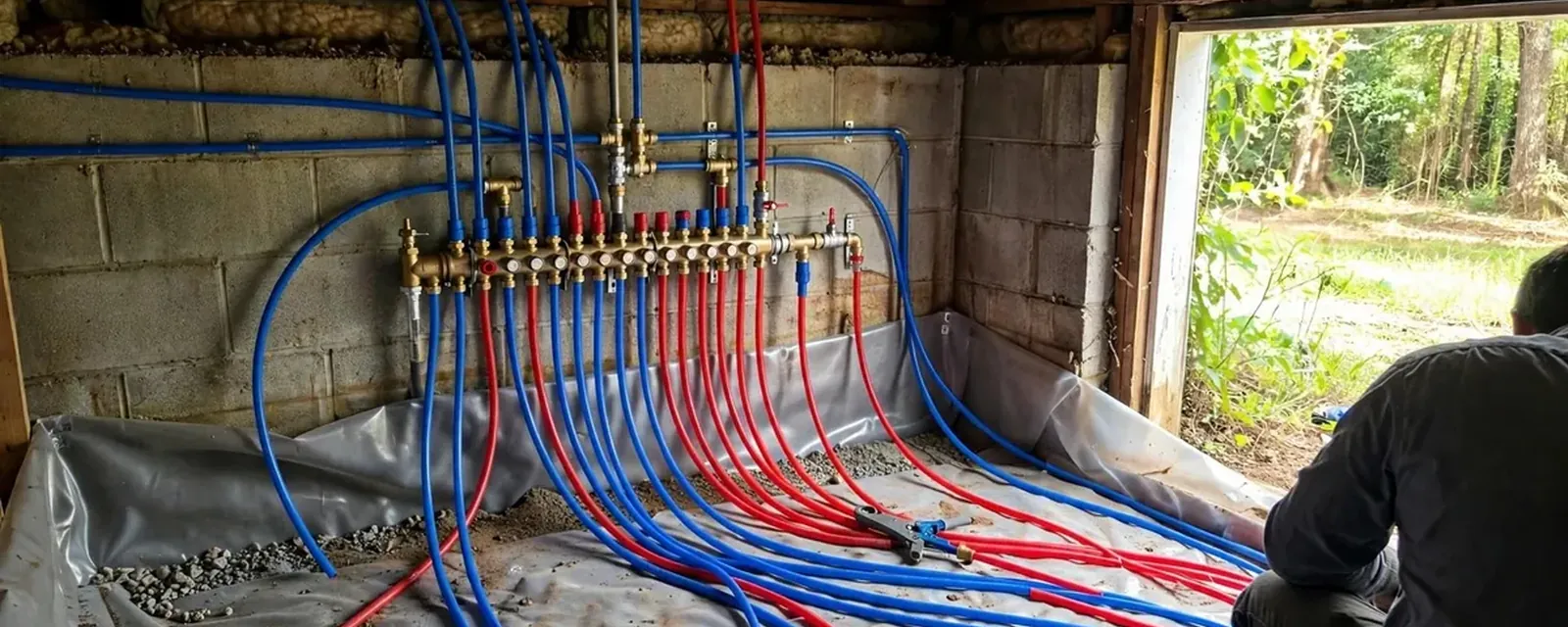
| PEX | Flexible, fewer fittings | Needs correct fittings and sunlight protection |
| CPVC | Lower cost, corrosion resistant | Can become brittle over time |
What a repipe is like for your household
We plan access through closets, basements and attic spaces, then cut small drywall openings where needed. Water is off during working hours and restored each evening where possible. The job is organized by zone, so you are not without water for days. We patch the access holes, or you can use your own drywall finisher.
How a repipe is planned
- InspectWe check pressure, flow and visible pipes, and test sample fixtures.
- ProposeYou get a layout, materials and a written price.
- InstallNew lines run from the main to each fixture group.
- Test and restoreWe pressure-test, flush the system and cap drywall openings.
What affects repiping price
Repipes are priced by house layout, and the final figure is written down before we start.
- Size and layout. More fixtures and floors increase work.
- Material. PEX, copper and CPVC differ in price and labor.
- Access. Finished basements and plaster walls take more care.
- Permits. Ask the Village of Mundelein building office at 847-949-3283 what applies.
- Insurance. Policies often exclude pipe replacement unless a leak caused sudden damage.
Older Mundelein homes and what the pipes tell us
Older homes near downtown Mundelein and the Metra station may still have galvanized supply lines or mixed copper. Newer subdivisions off Route 60 and Route 83 are more likely to have copper or PEX. We look at the main entry and the basement runs to date the system quickly.
Water from Lake Michigan arrives at about 8 grains per gallon, per the Central Lake County Joint Action Water Agency. That is not extreme, so scale is slow, but old galvanized pipe corrodes from the inside no matter how soft the water. If you have a single leaking pipe rather than a failing system, leak detection will find it. For new walls and additions, plumbing installation covers new runs.
Flushing after a repipe
New lines carry flux, cutting oil and small debris from the install. We flush every fixture, remove and clean the aerators and run water until it is clear. Cloudy water on the first day is common and clears quickly.
If you see brown or orange water after several days, call. It can point to a section of old pipe still connected.
Code for a full repipe
A repipe is covered by the Illinois Plumbing Code, the state standard (Title 77, Part 890 of the Illinois Administrative Code) and normally needs a permit and an inspection before walls are closed. The Mundelein building office at 847-949-3283 books those inspections for village properties.
Repiping FAQ
One leak in an otherwise sound system is a repair. Several leaks, rusty water or low flow throughout the house point to repiping.
Many homes take a few days depending on size and access. We organize work so water is restored each evening where possible.
Yes, such as the kitchen and bath lines. A partial repipe can solve a local problem.
PEX is widely approved for potable water when installed with the correct fittings. We explain the options for your home.
If the cause is corroded pipe, yes. We test first because the cause could also be a failed regulator or a partially closed valve.
Yes. If a pipe bursts, the 24/7 line sends a plumber. See our burst pipe page.