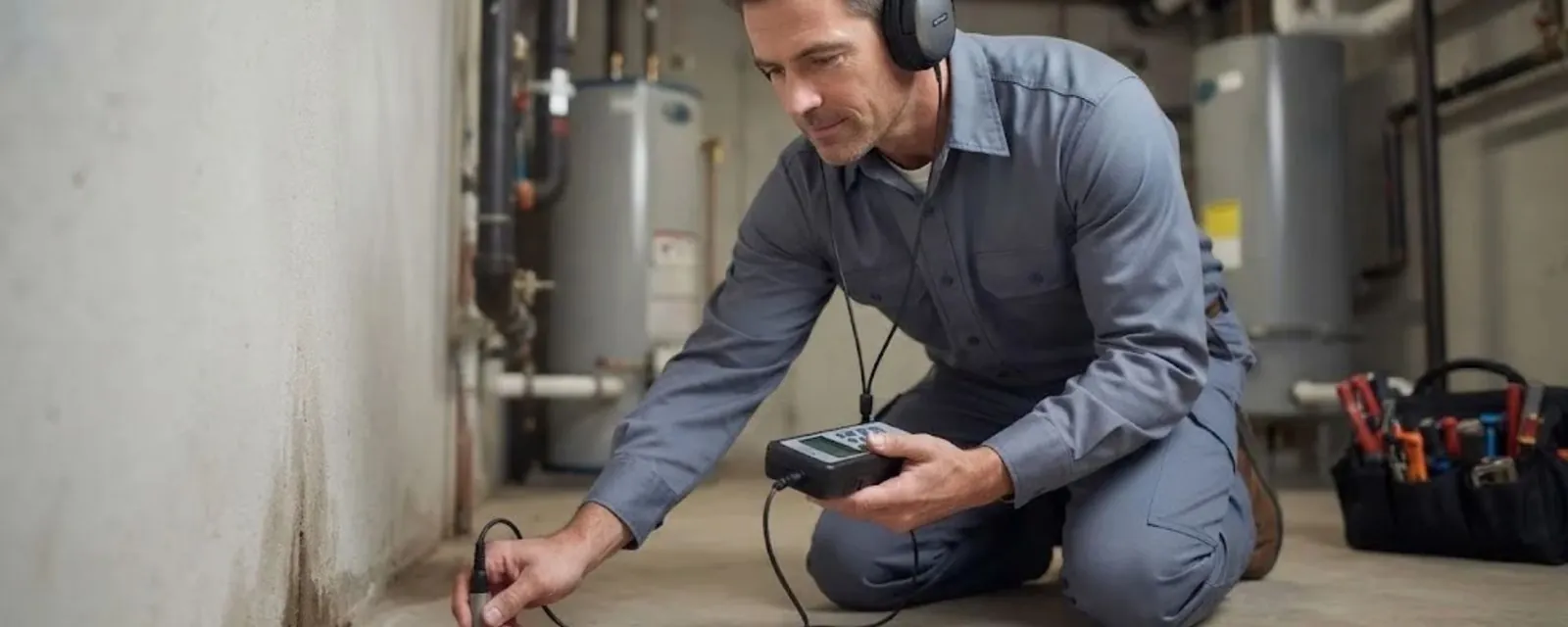
Leak detection in Mundelein, IL starts with the symptom
Leak detection is the process of finding where water is escaping from a pipe you cannot see. Callers rarely say leak detection first. They say the meter is spinning with everything off, the bill doubled, a ceiling stain is spreading or a floor feels warm.
Our 24/7 line takes those descriptions seriously. A licensed plumber starts with the symptom, narrows the area with pressure tests and electronic listening, and pinpoints the leak before opening any wall. You then decide on the repair with the facts in hand.
If water is actively coming through
Shut off the main water valve, usually near the water meter in the basement, and turn off power to any wet area. Move valuables, put a bucket under drips and take photos for your insurance. If the ceiling is bulging, do not stand beneath it. Then call us so we can find the source before the damage spreads.
Symptoms that point to a hidden leak
- The water meter keeps moving after every fixture is closed.
- Your water bill rises while household habits stay the same.
- A damp patch, stain or bubbling paint on a wall or ceiling.
- A warm spot on the floor, or the sound of water hissing in the wall.
- Low water pressure at every fixture at once.
- Musty smells or mold near a bathroom, laundry or under-sink cabinet.
Meter running and high bill: where we look first
We start at the meter. With every fixture off, a moving dial or flashing low-flow indicator tells us water is leaving the house somewhere. We then close the main valve inside the house. If the meter stops, the leak is inside the home. If it keeps moving, the leak is on the buried service line between the meter and the foundation.
Inside leaks are traced by isolating zones, such as the water heater, the bathrooms and the kitchen. Underground leaks are handled on our water service line repair page.
Equipment and what it finds
| Method | What it detects | Typical use |
|---|---|---|
| Pressure testing | Loss in isolated pipe sections | Narrowing zones |
| Acoustic listening | The sound of escaping water | Slab and wall leaks |
| Thermal imaging | Temperature differences from hot leaks | Radiant and hot lines |
| Moisture meter | Dampness in drywall and wood | Ceiling and wall stains |
| Camera | Cracks and drips inside drains | Drain line leaks |
How the visit works
- Listen to the storyYou describe the symptom and the plumber reads the meter.
- IsolateWe shut off zones and compare pressure drops.
- PinpointListening gear and moisture readings narrow the leak to a small area.
- ReportYou get a written finding, a photo where possible and repair options.
What affects leak detection pricing
The price depends on how easy the leak is to reach and confirm.
- Location. A leak in an open basement is quicker than one under a slab.
- Pipe material. Copper, PEX, galvanized and cast iron respond differently to listening gear.
- Depth. Buried lines need more equipment.
- Follow-up repair. Opening drywall or concrete adds work after the find.
- Hour of the call. After-hours dispatch has its own rate.
Many homeowners policies cover sudden pipe failures but not long-term seepage. Take photos before cleanup and ask your insurer what applies.
Call (847) 281-8626 for a clear priceLeaks that are specific to local homes and yards
Houses near the lakes at Diamond Lake and Countryside Lake often have crawl spaces and basement walls that sweat or seep, so a damp wall is not always a pipe. We check pipes first, then explain whether groundwater or condensation is the cause. If it is groundwater, our basement waterproofing page covers the next step.
Irrigation lines and yard spigots are another source. A lawn that stays soggy near a hose bib or a sprinkler valve box can mean a buried leak. Mundelein Public Works can confirm whether a street-side main is involved at 847-949-3270.
Standards behind leak work
Finding a leak is diagnostic, and the repair that follows is covered by the Illinois Plumbing Code, the state standard (Title 77, Part 890 of the Illinois Administrative Code). A pressure test and a meter check are the same basic methods plumbers use everywhere, and we explain the readings so you can see what we see.
What to do before we arrive at a suspected leak
These steps protect the house while you wait.
- Turn off every fixture and check whether the meter dial still moves.
- If it moves, close the main valve and leave it closed until we arrive.
- Stay away from wet electrical outlets and cords.
- Photograph stains, warm spots and meter readings with times.
- Call (847) 281-8626 and describe what you found.
Leak detection questions
Yes. The 24/7 line sends a licensed plumber for active leaks, flooding and running meters. Tell us where the water is and shut off the main valve if you can.
We test pressure, listen with acoustic equipment, scan with moisture meters and thermal cameras and then open only the small area that the evidence points to.
Check the meter with all fixtures off. If it moves, there is a leak, either inside or on the buried line. A plumber can separate the two.
Yes. Listening equipment can locate many leaks within a small area. The repair may still require opening the slab or rerouting the pipe.
Coverage varies. Sudden bursts are usually covered, while gradual seepage often is not. Document everything and call your agent.
Yes. See our commercial plumbing page for after-hours work in shops and offices.