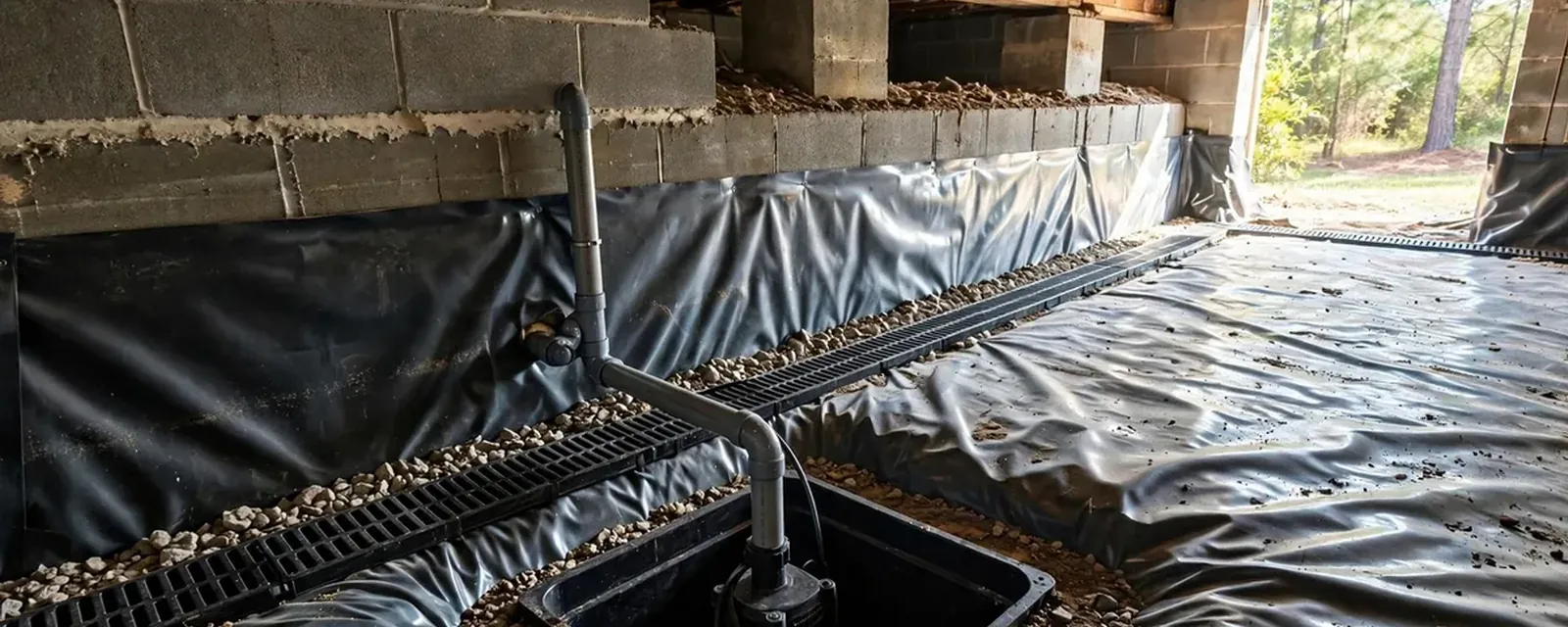
The idea in plain terms
Water enters a basement through cracks, joints, the floor-wall seam, window wells or up through the slab under pressure. Waterproofing either keeps it out, collects it and pumps it away, or does both. The right plan matches the entry point.
A damp wall from condensation is a different problem from a stream coming through a crack.
Main approaches
| Method | What it does | Best for |
|---|---|---|
| Interior drain and sump | Collects water at the footing and pumps it out | Seepage at the floor-wall joint |
| Exterior membrane and drain | Seals the outside of the wall and drains the footing | Persistent wall leaks, major remodels |
| Crack injection | Seals a single crack from inside | Isolated wall cracks |
| Grading and gutters | Directs surface water away | Low spots and downspouts |
| Window well fixes | Adds drains and covers | Leaks at windows |
Start with the cheap things
Gutters, downspout extensions and grading are the first fix. Water that pours against the foundation during every rain will find a way in. Extend downspouts several feet from the house and slope soil away.
Many basement leaks stop after those two changes, and nobody had to dig.
When a sump pump is part of the answer
If water comes from below or collects at the footing, a sump pit and pump with a discharge line is the normal solution. See sump pump repair for service on an existing system. A battery backup protects against outages.
A drain tile system around the footing leads water to the pit. Interior systems install it under the slab edge.
Be careful with sales pitches
Waterproofing is a big expense and the market includes aggressive sales. Ask for a clear diagnosis of how water enters, a written scope, warranty terms and a list of what is excluded. Get more than one opinion for large projects.
A plumber is a good first call because we can check supply, drain and sump systems that may be the actual cause.
What waterproofing does not do
It will not fix a leaking pipe, repair a failed sewer line or cure condensation on cold walls. It also does not replace good drainage outside. A dry basement depends on gutters, grading, a working sump and sealed penetrations all together.
If a contractor promises a magic fix for every kind of wetness, be careful.
Questions to ask before you sign
Ask where the water enters, how the contractor knows and what happens if the fix does not work. Ask whether the warranty transfers if you sell, whether it covers the pump and battery and whether service is local. Ask for references and read the exclusions.
A clear scope with photos of the problem area is a good sign.
Cost thinking
Drain tile and sump systems cost several thousand dollars and exterior excavation costs more. Gutters, downspouts and grading cost far less and often solve the problem. Start with the inexpensive fixes and move up only if water persists.
Keep a log of rain and basement conditions so you can tell whether each step worked.
Finishing a basement over a damp floor
If you plan to finish the basement, solve the water first. Carpet, drywall and wood framing over a damp slab grow mold and rot. Use materials that tolerate moisture, leave a gap at the base of walls and plan access to the sump and cleanouts.
A moisture test on the slab over a few days shows whether it is truly dry.
When to call a plumber first
Start with a plumber when water appears near pipes, near the water heater or at the lowest drain. Those are plumbing clues. A plumber can rule out a pipe leak in an hour, which can save you the cost of a waterproofing job you do not need.
If groundwater is the cause, we tell you honestly and point you toward the right fix.
Why timing matters
Water problems are easiest to diagnose during or just after a rain. If you can, photograph the basement while water is present and note the weather. That evidence helps the plumber or contractor see the entry point rather than guess.
Waiting for a dry spell to call is a common mistake.
Codes and standards
Interior drains and sump piping are covered by the Illinois Plumbing Code, the state standard (Title 77, Part 890 of the Illinois Administrative Code), and structural or exterior work may need village permits.
Mundelein notes
Lake County has areas of high groundwater, and homes near Diamond Lake and Countryside Lake sit close to water bodies. In those areas basements see more pressure from groundwater after storms. Mundelein Public Works at 847-949-3270 can answer questions about street drainage.
For permits tied to drain tile, sump discharge or structural work, call the Mundelein building office at 847-949-3283.
Signs it is groundwater, not plumbing
- Water appears after heavy rain, not on dry days.
- The leak is along the floor-wall seam.
- The slab is damp near the sump pit.
- Efflorescence (white powder) shows on masonry walls.
- Your water bill has not changed.
Plumbing causes that mimic groundwater
A leaking supply line, a failed water heater, a sewer backup and a broken sump discharge line can all put water on a basement floor. We check these first so you do not pay for waterproofing you do not need. Our leak detection service traces hidden plumbing leaks.
If the water smells like sewage, stop and call. That is a drain problem, not groundwater.
Next steps
Photograph the wet area, note when it happens and keep a log of rain events. Call and describe it. We respond day or night to flooding. Neighbors in Lake Zurich and Grayslake use the same line.
A clear history makes the diagnosis faster and the plan cheaper.
Questions from Mundelein homeowners
No. Damp proofing slows moisture. Waterproofing is meant to stop liquid water.
It is part of an interior system. It removes water that reaches the footing.
Yes. Interior drains and pumps are common. Exterior work is used for major wall leaks.
Tape a square of plastic to the wall for a day. Moisture under the plastic is a leak, moisture on top is condensation.
The building office at 847-949-3283.
Need a plumber right now?
The line is answered 24/7. Call and a licensed plumber is dispatched.
Call (847) 281-8626