What a vent does
Every drain needs air behind the water. A vent pipe rises through the wall and out the roof so air can enter as water leaves. Without that air, water leaves slowly, traps can be sucked dry and sewer gas can enter the room.
Most houses have several vents joined into a stack that exits the roof. When the top of that stack clogs, every fixture tied to it can complain at once.
Symptoms of a blocked vent
A toilet that gurgles when the washer drains, a tub that drains slowly in sync with the sink or a faint sewer smell near a drain trap all suggest vent trouble. A single slow sink is more likely a local clog.
Timing helps. If symptoms appear after a storm or a freeze, a vent covered by leaves or ice is likely. If they have always been there, a design or slope issue may exist.
Safety first
Do not climb onto a wet, icy or steep roof. A fall hurts more than any clog. If you cannot reach the vent from a ladder at the eaves or a safe roof slope, call a plumber.
How a plumber checks a vent
- Listen and test fixtures We run water at several fixtures and note which ones gurgle.
- Look at the roof termination We inspect the vent pipe top for nests, leaves, ice or a damaged cap.
- Flush with a hose Water down the vent tells us if it drains. If it backs up, something is blocking it.
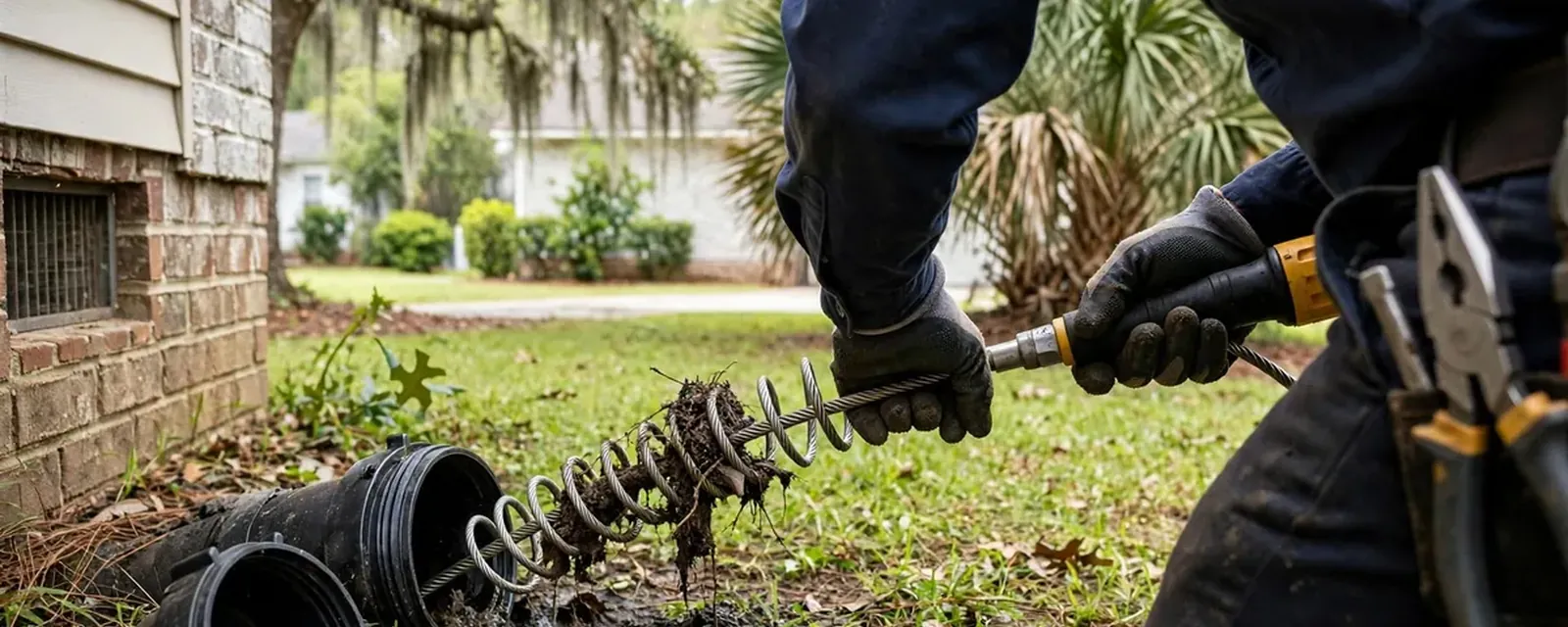
- Clear with a cable A small cable pushes through the blockage, then we flush again to confirm.
- Camera if needed When the clog returns, a camera finds a sag, a collapsed section or a bad connection.
Common causes in northern Illinois
Leaves and seed pods collect around a vent in fall. Birds and squirrels nest in open pipe ends. In deep cold, moisture from warm air freezes at the top of a small-diameter vent, narrowing it until frost closes it completely.
Older houses may also have vents that were never routed properly or were cut during a remodel. A vent that dead-ends in an attic is the kind of thing you find in a house renovated several times.
How to tell a vent clog from a main line clog
A vent clog affects air, so symptoms are gurgles, slow drains and smells. A main line clog affects flow, so symptoms are water backing up into the lowest fixture such as a basement floor drain or shower. Both can appear together when the main is badly blocked.
If water comes up in a basement floor drain when you run the washer, stop using water and call. That is a main line problem, and we respond day or night.
Preventing repeat vent trouble
Install a proper vent cap that keeps birds out but lets air through. Trim branches that drop leaves onto the roof. In deep cold, a larger pipe diameter through the roof resists frost closure.
Have the plumber photograph the vent top after clearing it. A picture on your phone makes it easier to spot a problem the next time.
Why smaller roof vents suffer in winter
Many older houses use a two-inch vent through the roof. Warm, moist air rising through it can frost over in deep cold, narrowing the opening a little more each night. A larger pipe, often three or four inches, resists closure.
If your vent freezes repeatedly, ask about upsizing the last stretch through the roof. It is a small change with a large payoff.
A note on air admittance valves
Some remodels use an air admittance valve, a small device that lets air in but keeps gas out, instead of running a vent through the roof. These can work in the right place, but they wear out and must stay accessible. If you have one that gurgles or smells, replace it.
A plumber can tell whether your fixtures are vented to the roof or served by one of these valves.
Codes and standards
Vent sizing and termination are covered by the Illinois Plumbing Code, the state standard (Title 77, Part 890 of the Illinois Administrative Code), which is why changing a vent can need a permit.
Safety steps before checking a vent
Roof work and sewer gas both carry risk.
- Stay off wet, icy or steep roofs.
- Do not use a ladder alone or in high wind.
- If you smell sewer gas indoors, open windows and call a plumber.
- Keep children and pets out of the area under the ladder.
Mundelein winters and your vents
Lake County winters are cold enough to frost over a narrow vent pipe on a still, humid night. If symptoms appear only in deep cold, tell the plumber so frost is checked first. A larger diameter pipe through the roof is a common fix for repeat frost closures.
For permit and code questions about changes to a vent, the Mundelein building office is at 847-949-3283. Keep any storm-damaged roofing or flashing work separate and ask your roofer for help with that.
Vent problem or drain clog?
| Clue | Likely cause |
|---|---|
| One sink drains slowly | Local clog in the trap or branch |
| Several fixtures gurgle together | Blocked vent or main line |
| Sewer smell near one drain | Dry trap or a vent leak |
| Symptoms only in deep cold | Frost closing the vent top |
What you can do yourself
From the ground, check that the visible vent cap is intact and that nothing is leaning on it. Run water in each fixture to see which gurgle. Write notes for the plumber. Resist the urge to pour chemical drain cleaner into a gurgling system, because the fault is air, not a local plug, and the chemical sits in the pipe.
When the problem points to the main line, drain cleaning or a sewer camera inspection is the next step. Neighbors in Grayslake and Hawthorn Woods often report the same winter issue.
Questions from Mundelein homeowners
It can make a toilet flush slowly or gurgle. A true backup usually means the drain itself is blocked.
No. A dry trap or a leak in the drain line can cause it too.
No. Chemical products do not clear a vent and can harm pipes or injure you.
In deep cold, moisture can freeze at the top of a small-diameter vent and narrow the opening.
The Mundelein building office at 847-949-3283 can say what applies to your address.
Need a plumber right now?
The line is answered 24/7. Call and a licensed plumber is dispatched.
Call (847) 281-8626