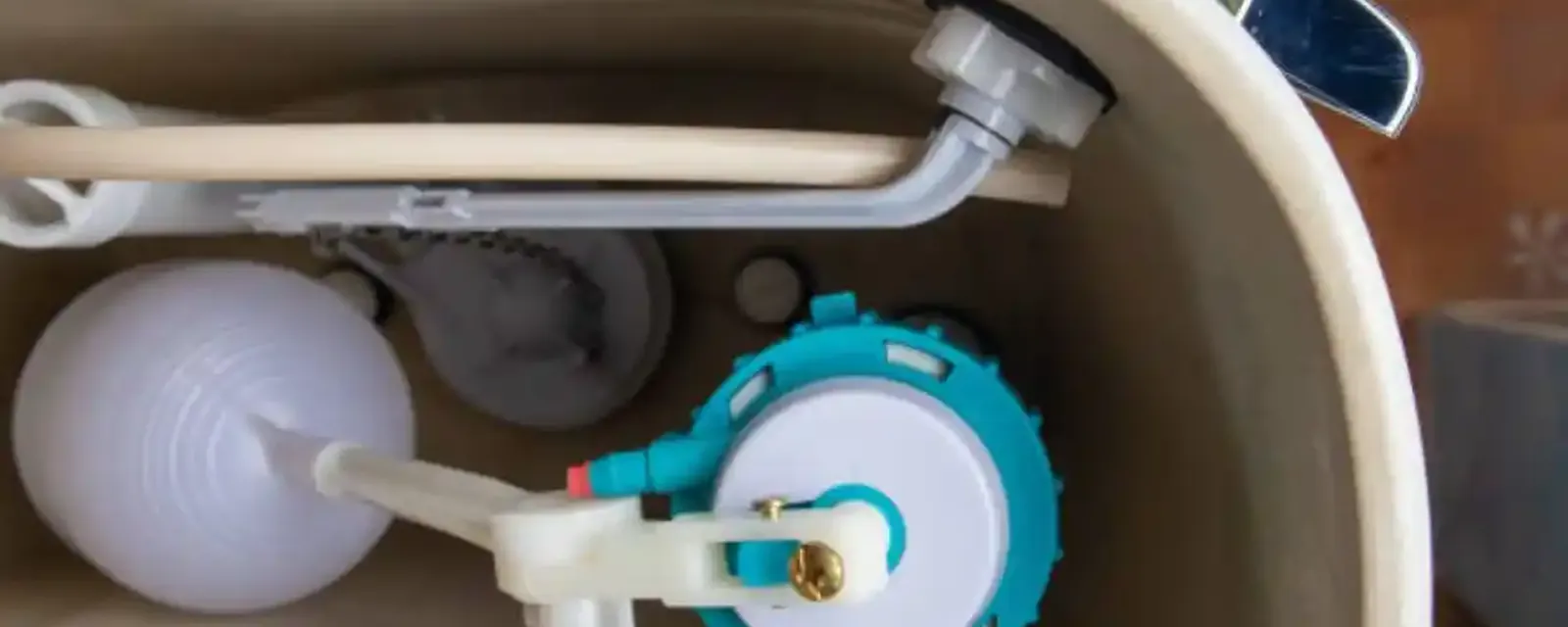
What the overflow tube does
The overflow tube is the vertical pipe in the middle of the tank. If the fill valve fails to shut off, water rises to the top of the tube and spills down it into the bowl instead of onto your floor. It is a safety drain, and it sends a signal when it carries water: the toilet runs.
A properly set tank water level sits about an inch below the top of the tube. Anything higher is a problem.
Signs of an overflow problem
You hear a hiss or a trickle long after a flush. The tank never seems to stop filling. Water drips down the inside of the tube. A mark on the tube or tank shows where the waterline normally sits.
These are different from a flapper leak, where water slips under the rubber seal at the bottom of the tank. The dye test below tells the two apart.
Find the cause in ten minutes
- Lift the lid and look Is water running into the top of the tube? If yes, the level is too high or the fill valve is failing.
- Check the float Lower the float arm or turn the adjustment screw so water stops about an inch below the top of the tube.
- Try the flapper dye test Put a few drops of food coloring in the tank. If color shows in the bowl without flushing, the flapper leaks.
- Inspect the fill valve If water will not stop even at a low float setting, the valve needs replacement.
- Check the tube itself A cracked or loose tube can leak at its base. Replace the flush valve if so.
Common fixes
Adjusting the float is free and fixes most overflow cases. A new fill valve is an inexpensive part that mounts in the same hole. A cracked overflow tube is part of the flush valve, which sits in the tank bottom, and replacing it requires removing the tank from the bowl.
That is a job many homeowners can do, but a leaking tank-to-bowl seal ruins a bathroom floor, so some prefer a plumber.
Symptom and likely cause
| Symptom | Likely cause | Fix |
|---|---|---|
| Water pours into the tube | Float set too high | Lower the float |
| Hissing while tank is full | Failing fill valve | Replace fill valve |
| Dye leaks into bowl | Worn flapper | Replace flapper |
| Water at base of tube | Cracked flush valve | Replace flush valve |
Why ignoring it costs money
A toilet that runs wastes water all day. A steady stream can waste a lot of water per month and adds directly to the water and sewer bill. It also wears the fill valve and shortens its life.
The fix often costs less than a month of waste, which is why we treat a running toilet as a quick, worthwhile call.
Parts that wear around the overflow tube
The flush valve seat at the base of the tube corrodes with age and mineral deposit. The flapper rests on this seat, and a rough seat lets water slip past. Some seats can be smoothed. Others need the whole flush valve replaced.
If your toilet is two-piece and more than fifteen years old, ask about replacing the flush valve and the fill valve together.
Float types and adjustments
Older fill valves use a ball float on a metal arm. Newer ones use a cup that slides on the valve body. Each has an adjustment, either a screw on the arm or a clip on the cup. Raise or lower the float so the water stops about an inch below the tube top.
Do not bend a metal arm to adjust it. It weakens the arm and can cause it to fail.
When to shut off the toilet
If water rises into the overflow tube and does not stop, close the supply valve behind the toilet, flush to empty the tank and call. Leaving it running wastes water and may stress the valve. If the supply valve will not turn, close the main and call right away.
We answer 24/7 for plumbing emergencies.
Teaching kids and guests
Many running toilets begin when someone jiggles the handle a little too long or hangs something on the chain. A short note about how the flush works prevents repeat calls. If the handle sticks, the lever arm or chain may need adjusting.
These small fixes take minutes and cost nothing.
Codes and standards
Toilet fill valves and flush valves are covered by plumbing fixture standards, and the Illinois Plumbing Code, the state standard (Title 77, Part 890 of the Illinois Administrative Code) requires approved fittings and anti-siphon protection on fill valves.
What to do first when a toilet will not stop
Act before water reaches the floor.
- Lift the lid and push the float up to stop the fill.
- Close the supply valve behind the toilet by turning it clockwise.
- Flush once to empty the tank, then check the level.
- If water spills from the bowl, stop using the toilet and call.
Mundelein notes
Mundelein water is supplied by the Central Lake County Joint Action Water Agency, which reports moderate hardness near 8 grains per gallon. Scale builds on fill valve seats and flapper seals slowly. Rinsing the tank mineral deposit now and then keeps the seal tight.
For billing questions about water use, Mundelein Public Works is at 847-949-3270. A sudden jump in the bill without a change in habits is worth a toilet dye test.
When the problem is not the tube
If the toilet clogs, gurgles or overflows from the bowl, that is a drain problem, not an overflow tube problem. A bowl overflow is an emergency. Close the supply valve behind the toilet, stop flushing and call.
Our line is open 24/7 for backups. See drain cleaning for what we do when a line is blocked.
Parts worth replacing together
If the fill valve and flapper are the same age, replace both. The cost difference is small, and the toilet will stay quiet for years. Replace the supply line too if it is old and crusty.
Homes in Vernon Hills and Grayslake get the same service and quick scheduling.
Questions from Mundelein homeowners
No, unless water is spilling onto the floor. It does waste water, so fix it soon.
About an inch below the top of the overflow tube, or at the fill line marked inside the tank.
Yes, with an adjustable wrench and the right part. Shut off the supply first.
A slow flapper leak lowers the tank until the fill valve cycles on. It is called phantom flushing.
Mundelein Public Works at 847-949-3270 can discuss billing questions.
Need a plumber right now?
The line is answered 24/7. Call and a licensed plumber is dispatched.
Call (847) 281-8626