Why backups matter
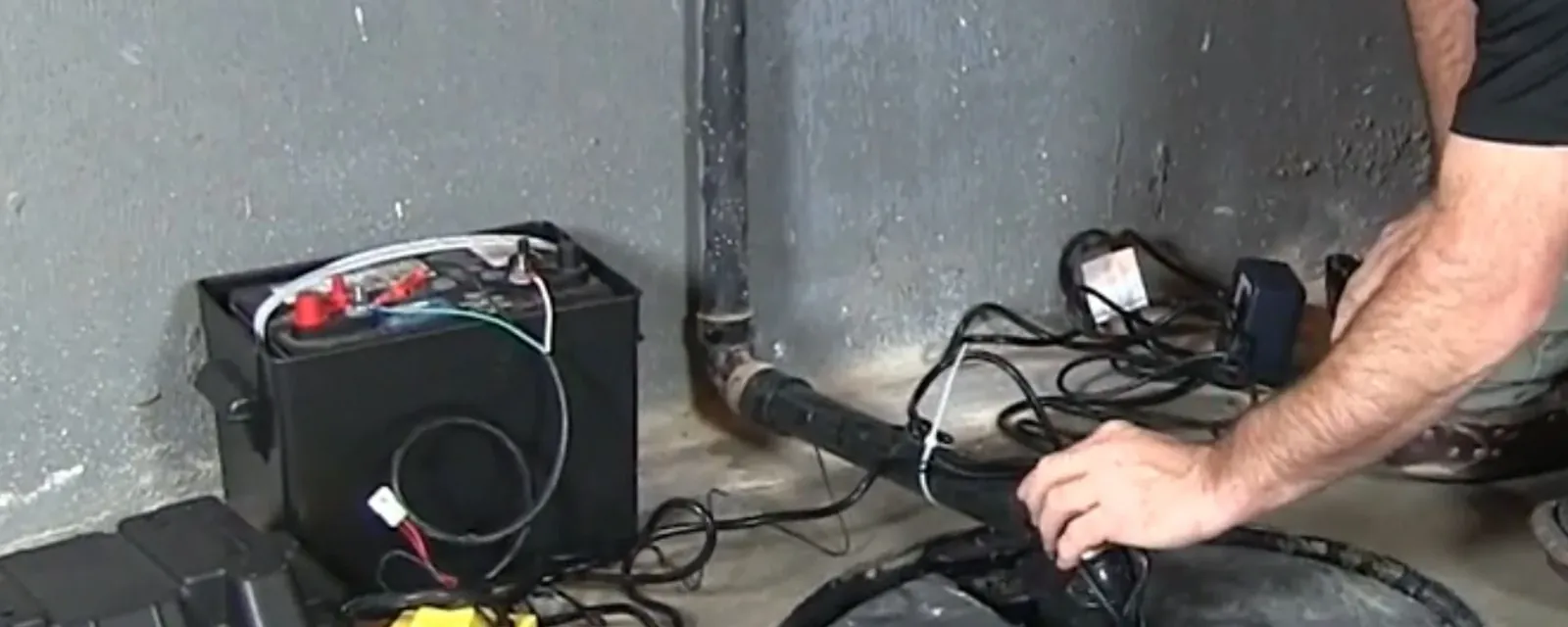
A sump pump removes groundwater from a pit and sends it outside. In a heavy storm the grid may fail just as the pit fills. Without power, the pump stops and the basement floods. A battery backup takes over when the primary pump loses power or fails.
In Lake County, with its heavy spring rain and flat lots, the combination is common.
Backup types and trade-offs
| Type | How it works | Trade-off |
|---|---|---|
| Battery backup pump | Second pump on a deep-cycle battery | Limited run time, battery replacement |
| Water-powered backup | Uses city water pressure to pump | Needs municipal water and can waste water |
| Generator | Powers the primary pump | Needs fuel and set up |
| Whole-house standby | Powers many circuits | Higher cost |
What changes the price
Pump capacity, battery size, the controller, the alarm and installation difficulty all affect the price. A backup pump with a larger battery runs longer. A system with a smart alarm sends a text when the battery is low or the pump runs.
Install complexity depends on the pit size. A small pit may need a larger basin before a second pump fits.
How long will a battery last?
A battery can run a pump for several hours of continuous work, or many hours of intermittent work. In a long outage with constant inflow, it may run out. A charger keeps the battery topped up between storms, and batteries wear out after a few years.
Test the system twice a year by pouring water into the pit and watching both pumps start.
Sizing the battery to your risk
Think about how much water your basement sees in a worst-case storm. A house that sees a trickle can get by with a smaller battery. A house that sees a steady flow in storms needs a larger battery bank or a second pump. Match the system to your history, not to a catalog number.
Ask the plumber to estimate run time based on your pit size and inflow.
Alarms and monitoring
A backup that fails quietly is worse than none. Choose a system with an audible alarm that sounds when the pump runs, the battery is low or the float stays up. Some systems send a text. Place the alarm where you will hear it, not in a far corner of the basement.
Test the alarm when you test the pump.
Common mistakes
The most common errors are using the same discharge line without a second check valve, placing the backup too far above the primary, forgetting to keep the battery charged and ignoring a pump that cycles all the time. Each one reduces protection when you need it most.
A short annual visit catches them.
A realistic outage scenario
A summer storm knocks out power at midnight and drops several inches of rain. The primary pump stops. Water rises toward the top of the pit within hours. The backup starts, runs for a while and holds the level down until power returns. Without it, water would have reached the floor.
That kind of night is what the backup is for, and it is why many insurers like to see one.
Insurance and documentation
Many homeowner policies exclude water that backs up or seeps in unless you add a rider. Ask your agent about sump and sewer backup coverage, and keep receipts for the pump and battery. A recorded test each season shows you took care.
Photograph the system after installation. It helps if you ever file a claim.
Choosing between backup types
A battery backup is the most common choice because it works without any special water supply. A water-powered backup uses pressure from the municipal line and never runs down, but it needs city water and uses a lot of it while running. A generator protects the whole house but needs fuel and a safe place to run. Match the type to your lot, your supply and your budget.
In a house on a private well, a water-powered unit is not an option, so a battery or generator is the practical choice.
Codes and standards
Sump piping and check valves follow the Illinois Plumbing Code, the state standard (Title 77, Part 890 of the Illinois Administrative Code) and the pump maker's instructions.
Mundelein notes
Lake County has areas of high groundwater, and neighborhoods near Diamond Lake and Countryside Lake sit close to water bodies. Those basements see more water after storms and benefit from a backup. Mundelein Public Works at 847-949-3270 can answer questions about storm drainage in the street.
For permits tied to a sump discharge or electrical work, call the building office at 847-949-3283. Where the discharge goes matters, and it should not drain onto a neighbor's lot.
Installing the backup
We inspect the existing pit, check the discharge line and the check valve, place the backup pump slightly above the primary, mount the battery and controller and test the system. The check valve on each pump prevents backflow.
A backup works best when the primary pump is in good shape. If it is old, replace both together.
Maintenance habits
- Test both pumps every spring and fall.
- Replace the battery on the manufacturer's schedule.
- Clear debris from the pit and check the float.
- Make sure the discharge line is open and drains away from the house.
- Keep the alarm batteries fresh.
When to call
If the pump runs constantly, cycles on and off, makes a grinding noise or the basement is already wet, call now. We answer around the clock. See also basement waterproofing for long-term options when the pit is only part of the problem.
Nearby homes in Hawthorn Woods and Libertyville face the same storm patterns, and our crews cover them.
Questions from Mundelein homeowners
It depends on the battery and the inflow, usually several hours of continuous running.
A good pump stops when the power does. A backup keeps it going.
Away from the foundation and not onto a neighbor's lot. Ask the building office at 847-949-3283 about local rules.
Yes, if the pit has room and the discharge line can support two pumps.
Twice a year, plus before the rainy season.
Need a plumber right now?
The line is answered 24/7. Call and a licensed plumber is dispatched.
Call (847) 281-8626